About Heat Exchangers and Condensers
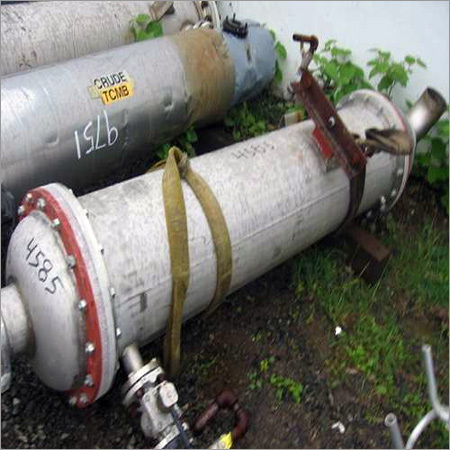
We are reckoned as one of the foremost traders, suppliers and distributors of a broad array of Heat Exchangers and Condensers. Extensively used for usage in petrochemical plants, refrigeration, natural gas processing, petroleum refineries and space heating applications, these condensers are engineered with mirror and TIG welding in stringent compliance with SS316 and SS304 parameters of quality. Customers can avail these heat exchangers and condensers in numerous sizes as per their requirements.
Features:
- A dull buffing finish
- Trouble-free operation
- Energy efficiency
- Suitable for high intensified heat transfer capacity
Superior Heat Transfer EfficiencyEngineered with customizable passes and precise baffle spacing, our shell & tube heat exchangers deliver optimized thermal performance for industrial cooling and heating tasks. The high-quality tube materials and surface finish options maximize efficiency in transferring heat between fluids, ensuring energy savings and process reliability.
Robust, Corrosion-Resistant ConstructionBuilt using Stainless Steel 304/316 or optional Copper tubing, these exchangers offer outstanding durability and resistance against corrosive media encountered in industrial environments. The units are designed for longevity, guaranteeing minimal maintenance and consistent performance even under challenging operating conditions.
Flexible Design for Diverse ApplicationsEvery unit can be customized in terms of tube dimensions, pass types, mounting orientation, and capacity. This adaptability makes them ideal for a wide variety of applications such as chemical processing, HVAC, food production, and oil refining. Industry-standard hydrostatic and pneumatic testing ensures safe and reliable operation.
FAQs of Heat Exchangers and Condensers:
Q: How are the heat exchangers and condensers tested for safety and reliability?
A: Each unit undergoes hydrostatic and pneumatic testing following ASME, TEMA, or IS standards to verify its integrity under specified operating pressures and conditions, ensuring safe operation in industrial settings.
Q: What are the available tube materials and how do they benefit different processes?
A: Tube materials include Stainless Steel 304/316 and Copper (optional). Stainless steel offers excellent corrosion resistance for aggressive fluids, while copper provides superior thermal conductivity and is ideal for specialized heat transfer requirements.
Q: When is it recommended to customize tube thickness and diameter?
A: Customization of tube thickness (1.2 mm2.5 mm) and diameter (12.7 mm25.4 mm) is advised based on the working pressure, fluid properties, and desired heat transfer rates. Our technical team assists in selecting the appropriate specifications for optimal performance.
Q: Where can these exchangers and condensers be mounted in industrial facilities?
A: Units can be installed in either horizontal or vertical orientation, depending on space constraints and process flow requirements, offering maximum flexibility for integration into plant layouts.
Q: What process fluids can be used with these exchangers and what gasket materials are available?
A: Suitable for water, oil, steam, refrigerants, and a variety of chemical fluids, the gaskets are available in Neoprene, EPDM, or Teflon, selected based on chemical compatibility to ensure leak-free operation.
Q: How is maintenance simplified for these shell & tube heat exchangers?
A: Designed for hassle-free tube cleaning and replacement, the construction allows quick access for inspection and servicing, reducing downtime and extending equipment life.
Q: What are the primary benefits of using these products in industrial heat transfer?
A: Key advantages include high heat transfer efficiency, robust and corrosion-resistant build, customizable configurations, and adherence to stringent industry standards, all contributing to improved process reliability and reduced operational costs.








 Send Inquiry


 Send Inquiry